
Zines as Teaching Tools
Humanizing education with comics

I’ve been trying to make more of my own teaching materials lately. This is, in part, a practical decision—our university is moving away from printed material to instead license digital content (largely textbook-based) for each semester, and much of what I want to teach and share isn’t found in textbooks. It’s also a form of modeling creativity and media for my students. I teach a literary magazine course, comics and zines, place-based writing, and creative placemaking in an honors college where classes are interdisciplinary, small seminars. With the new course materials model, it feels strange to teach print media and not have materials that are part of that world. It can also feel at odds with my teaching goals: to have students move through the world, attentive to place and how it stokes their curiosities and shapes their ways of seeing.
This spring, I am co-teaching a course that culminates in a two-week trip to Japan (in Kyoto and Nara), and so far, the course has been controlled by the bureaucratic machinery of the university. All the forms and logistics and red tape has been dominating both my experience of teaching and the students’ experience of learning (for instance, my co-instructor and half a dozen administrators have been trying for two months to help the university figure out how to pay the hotel—and it still hasn’t happened yet). As we shift from paperwork into active class sessions, I wanted to remind the students of their initial interest and enthusiasm for travel, so I turned to zines.
In the eight-week pre-departure section of the class, we’re learning about a pedagogy rooted in honors education, called “Place as Text.” Before we ever get on a plane, students are already working through Place as Text methods: they read Bernice Braid’s “Acts of Interpretation,” practice mapping and observation at a local international market, keep weekly diaries, and discuss how worldview shapes what one notices in a place. We are also reading about Shinto, Buddhism, yōkai, Japanese aesthetics, photography, and contemporary art (focusing on artists such as Yuki Tawada, Takashi Murakami, Rinko Kawauchi, Hiroshi Sugimoto, and Takuro Kuwata), and diving into Matsuo Bashō and Sei Shōnagon.
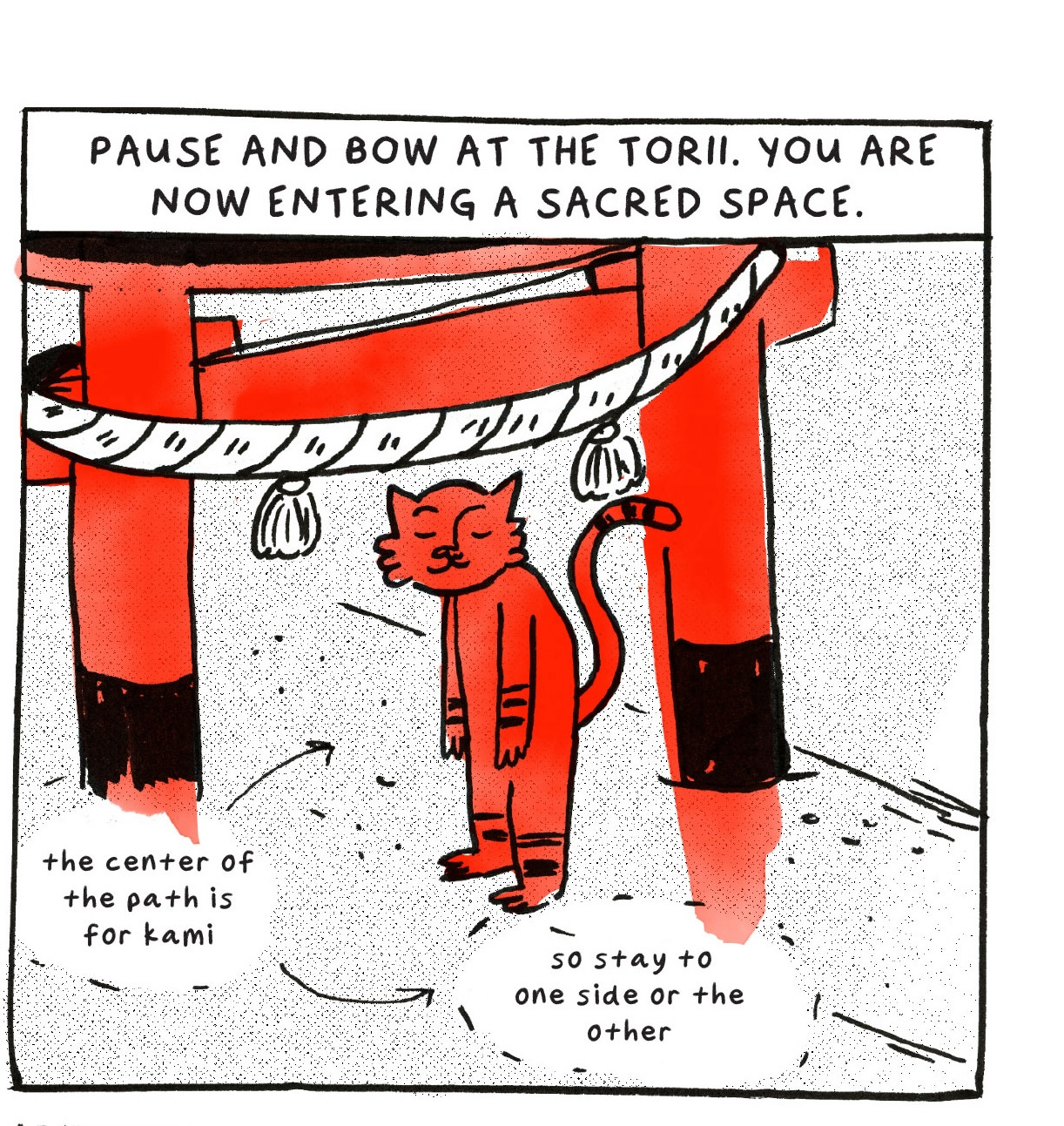
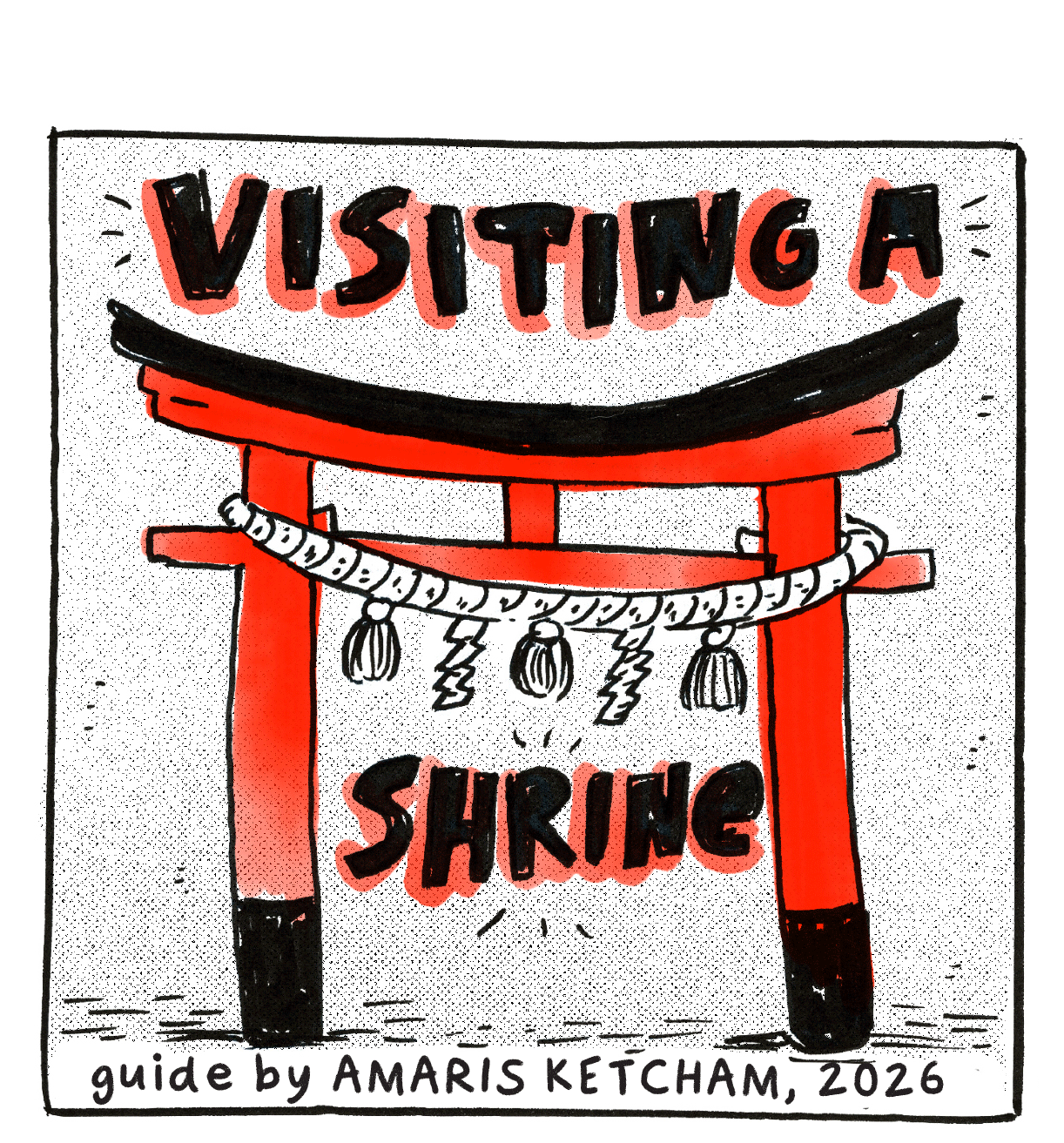
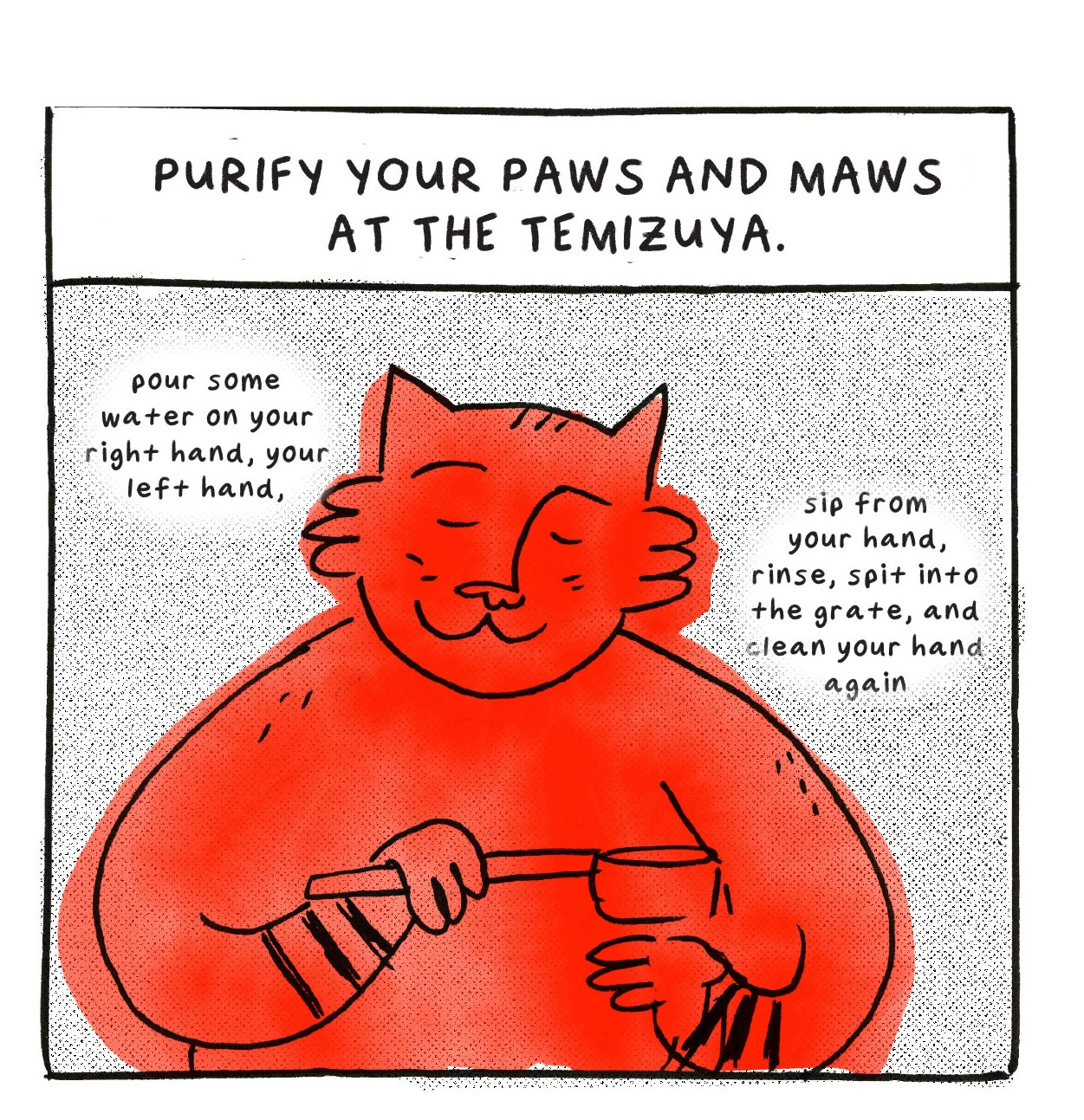
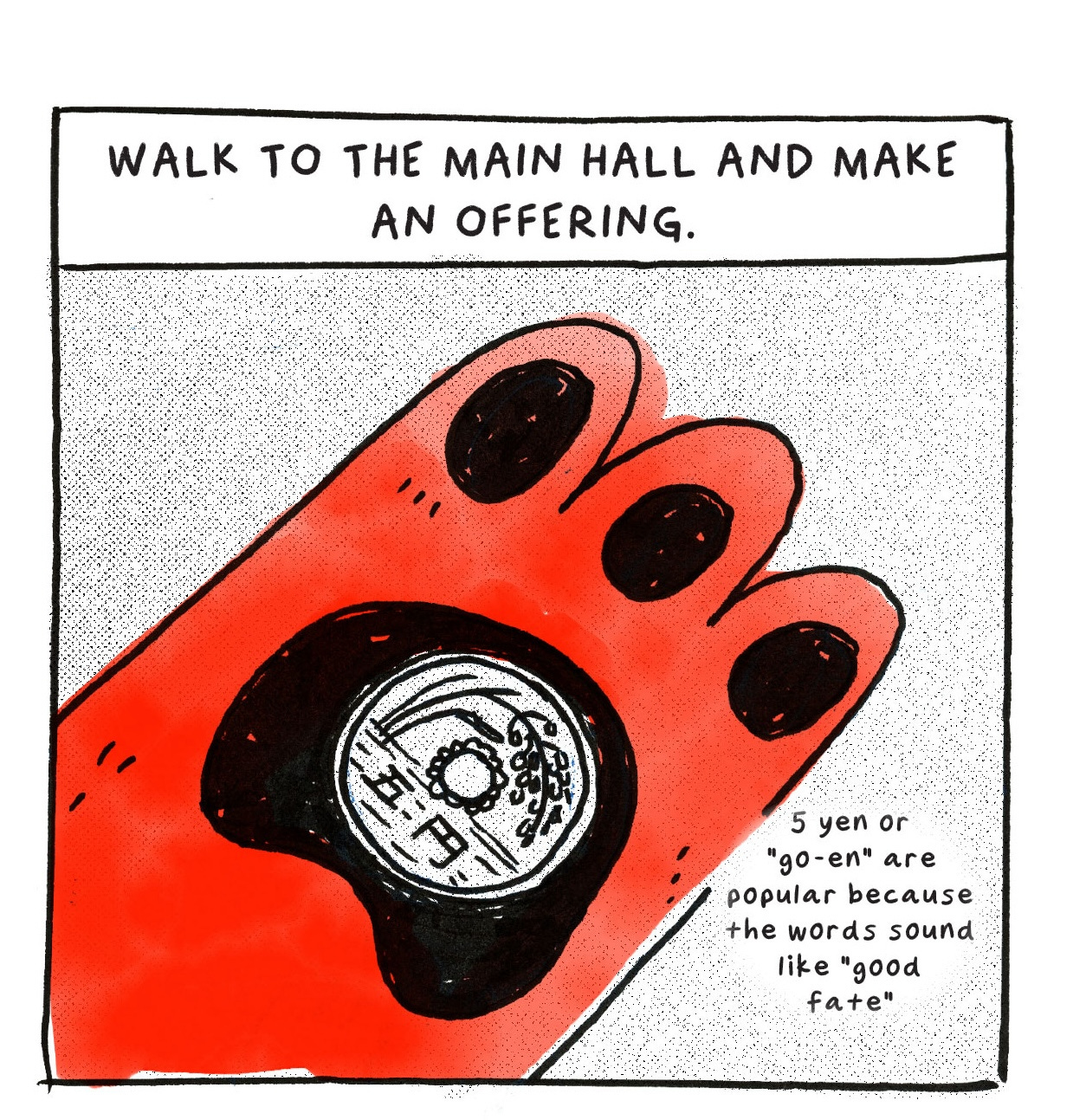
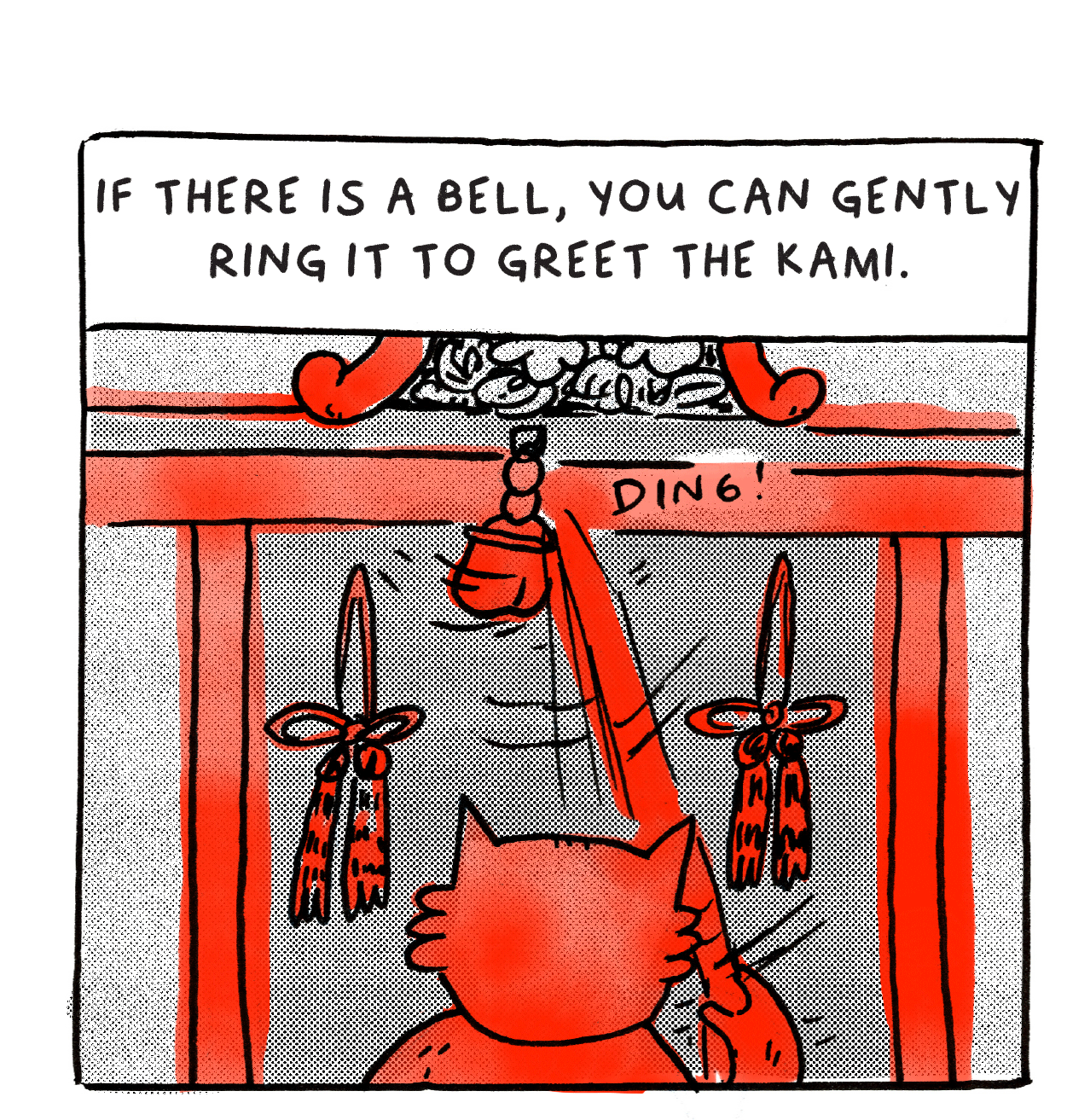
So this little shrine zine grew out of that context. I wanted something students could actually carry and use, something friendlier than a rules sheet but more memorable than a spoken reminder in class. One of the reasons I love zines like this is that they can hold information, but change the tone more easily than an “online learning management system” like Canvas. Instructive and personal.
Creating something personal, rooted in instruction and experience, matters for this class (and, I think, education in general). In Kyoto, we will begin by mapping neighborhoods and markets, building cognitive maps through walking and observation. We will echo a lot a tourist’s itinerary, visiting shrines, Buddhist temples, museums, Arashiyama, Kurama and Kibune, Nara, and touring Rokuhara with a phenomenologist who researches “dark tourism.” We will compare TeamLab’s “biovortex” fabricated nature with the sensory and spiritual experience of temple grounds. We will also collaborate with Kyoto University of the Arts to make lachrymatory vessels and develop final projects rooted in what we encounter on site. While our route may look like any other’s, my hope is that throughout the class, we will continue to interrogate our roles as visitors and artists, rather than tourists.
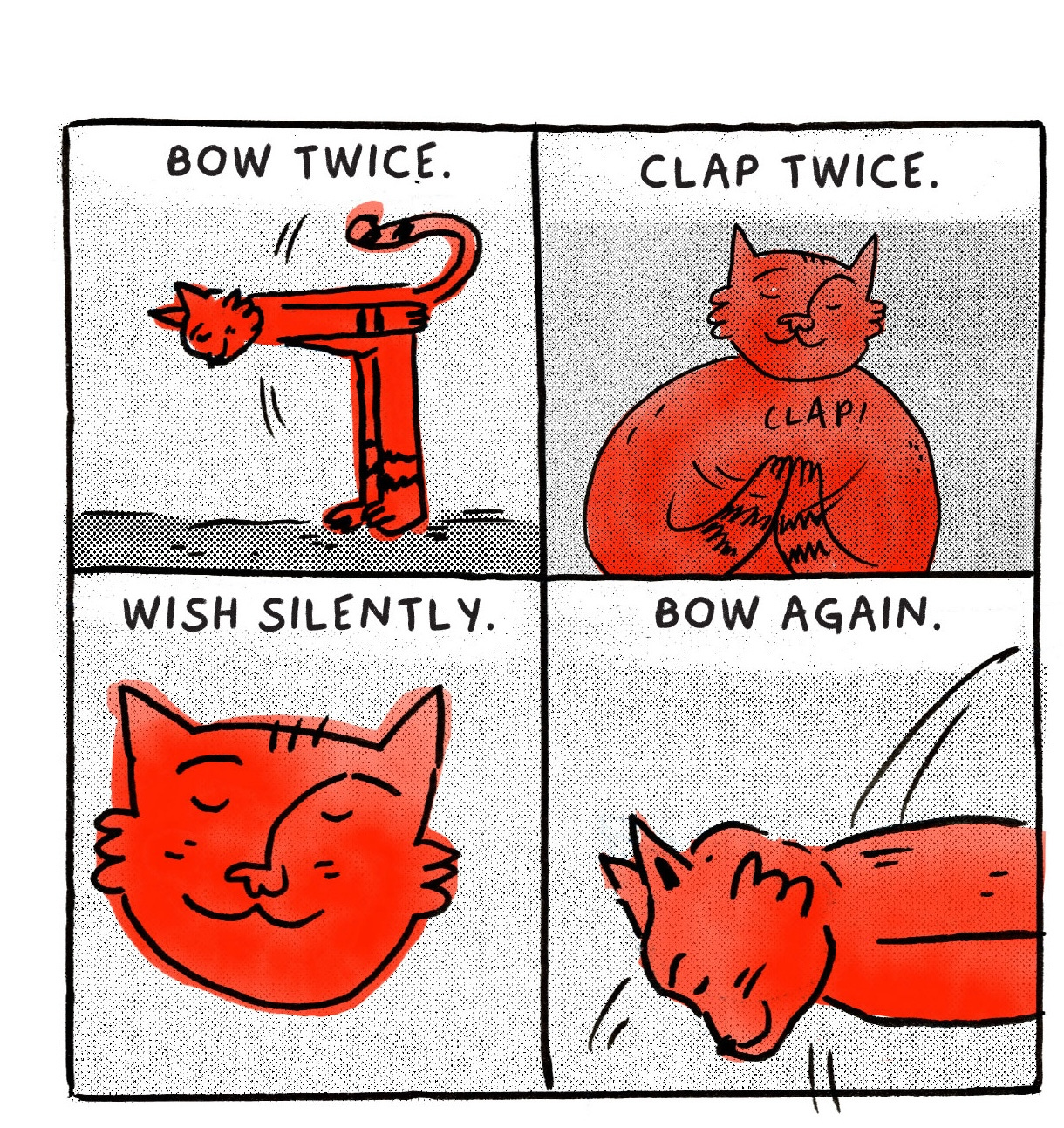
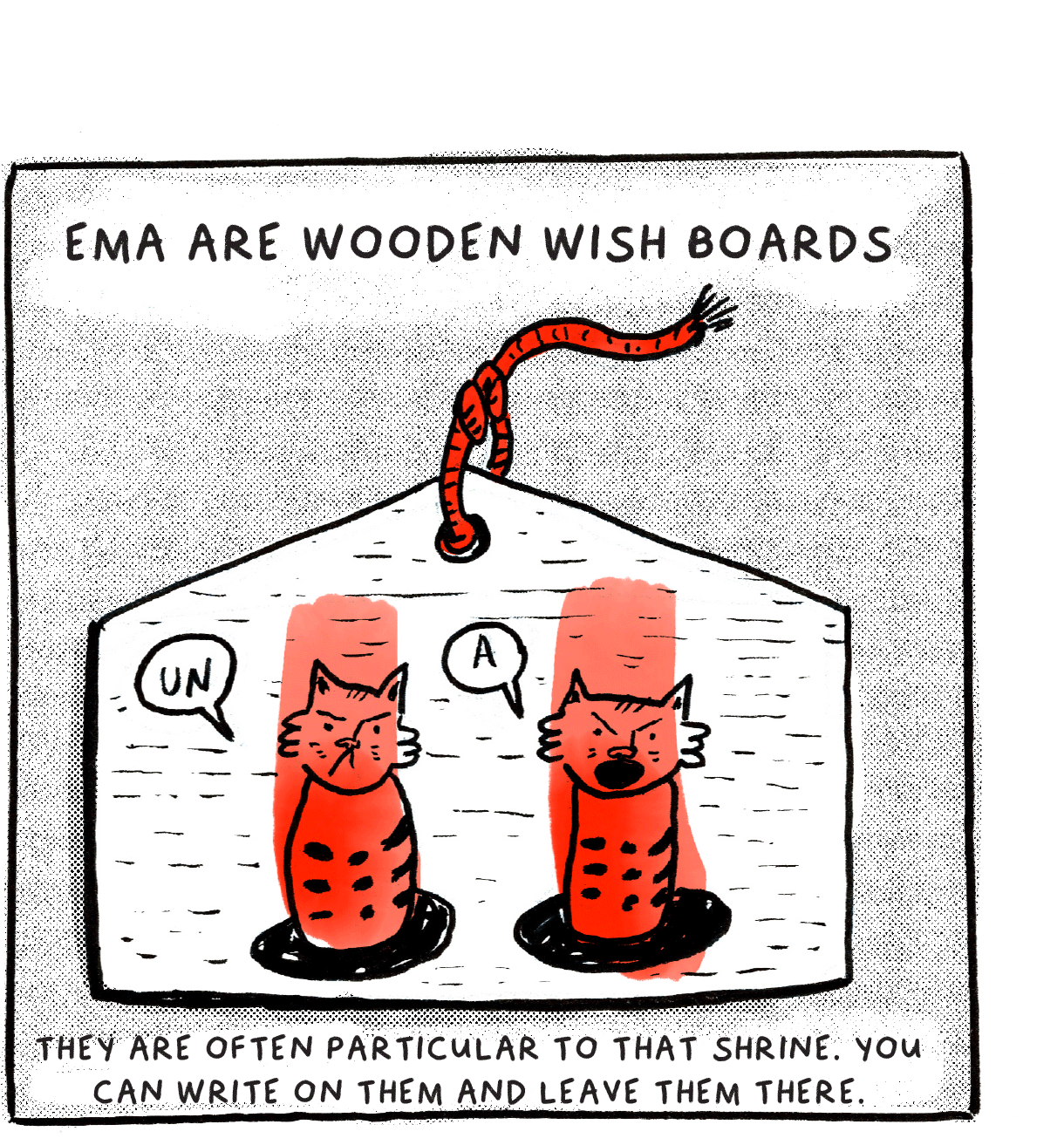
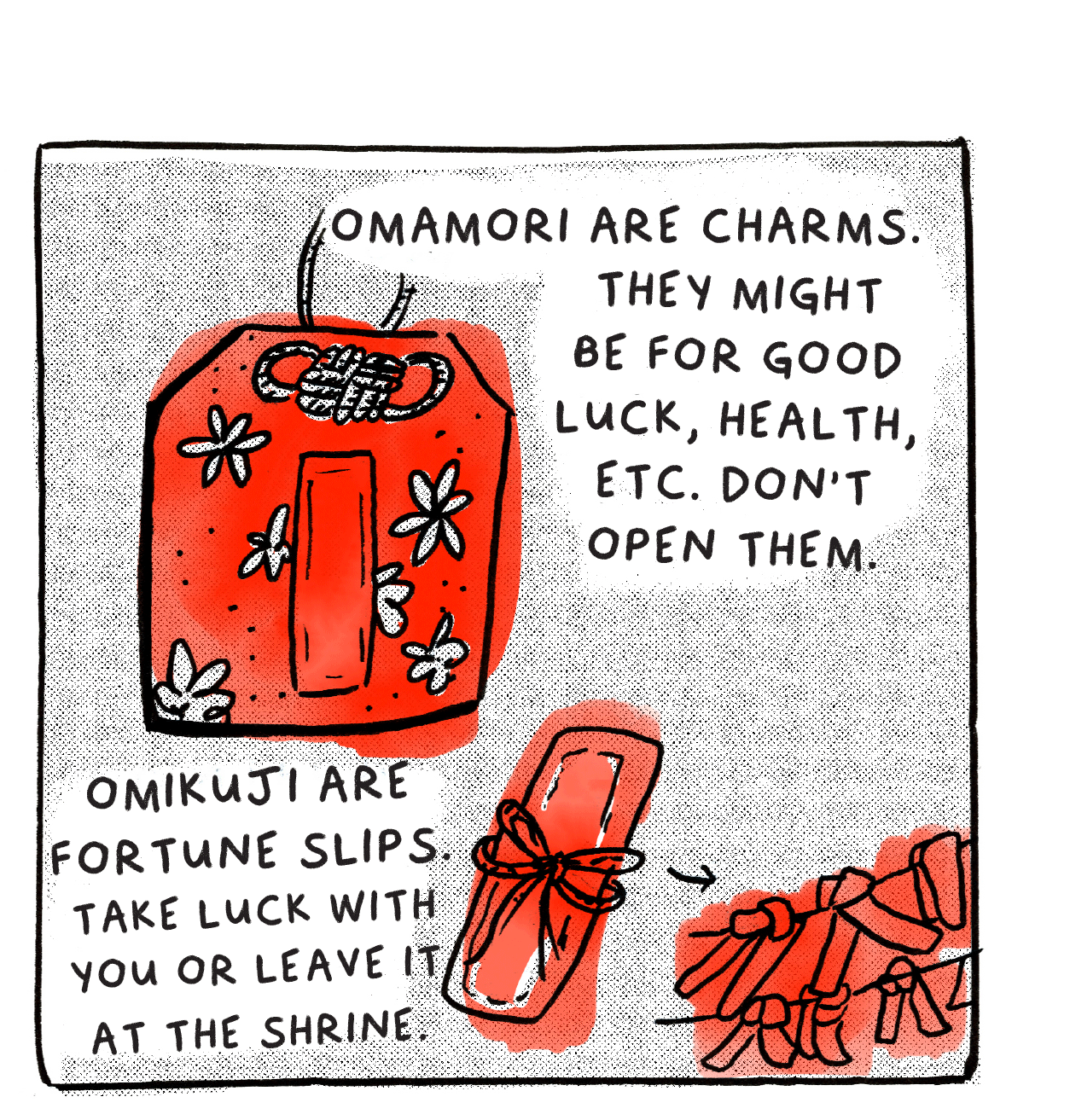
I suppose, too, though, that I like the idea of a class that creates its own souvenirs to remember the experience of it years later—maps, zines, diaries, the obligatory study abroad t-shirt. The assignments become objects of record, part of the experience.
I love this idea: “like the idea of a class that creates its own souvenirs to remember the experience of it years later—maps, zines, diaries, the obligatory study abroad t-shirt. The assignments become objects of record, part of the experience.”
Also, I have read this twice and keep reading it as “shreen zine.” 😆 The effect of word placement!
Would it be helpful if you had some books from our memoir class? I am downsizing everything I can. (Sob. 900 or so decks. Now 700. And I’m still clearing them out!)